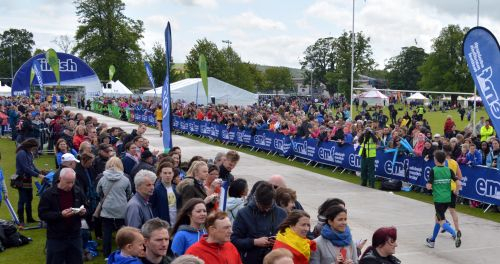
When thousands of runners assemble in Edinburgh for a weekend of races, they see start lines, kilometre markers, hydration stations and a waiting finish. What they do not see is the long sequence of decisions, checks and human effort required to put every one of those elements in place.
The Edinburgh Marathon Festival is particularly complex because it is not a single race in one location. Its programme includes junior events, a 5K, 10K, half marathon, team relay and full marathon. Saturday’s races are concentrated around Holyrood Park, while Sunday’s longer events travel from central Edinburgh into East Lothian and finish in Musselburgh.
Delivering that programme requires months of planning and a large event-day team working across multiple local-authority areas.
Designing a Course That Works Beyond the Map
A course may begin as a line on a map, but making it safe and practical is a much bigger task. The operations team must consider road widths, junctions, public transport, emergency access, resident movements and the number of runners expected at each point.
Every turn needs to be measured, risk assessed and clearly marked. Start areas must hold thousands of participants without dangerous overcrowding, while finish systems need enough capacity to keep exhausted runners moving after they cross the line.
The Edinburgh Marathon route creates an additional challenge by travelling from a dense city centre onto coastal roads and through several East Lothian communities. Each area has different access requirements. The course team must understand where barriers are needed, where runners might encounter narrow sections and how vehicles can reach an emergency.
Planning also includes the less visible elements: toilets, baggage vehicles, temporary signage, radio coverage, water deliveries, waste collection and arrangements for reopening roads.
Building the Event Overnight
Much of the infrastructure appears while Edinburgh is asleep. Teams install fencing, start pens, directional signs, timing equipment, toilets and event branding during tightly controlled setup windows.
The finish in Musselburgh must be prepared before many participants have even reached the Edinburgh start. Medal, refreshment and baggage areas need to be laid out in a sequence that prevents runners from stopping immediately beyond the line.
Course crews travel through each zone installing cones, barriers and signs according to detailed plans. A missing arrow or displaced barrier could create confusion, so supervisors inspect each section before runners arrive.
The Saturday programme adds another layer. Infrastructure around Holyrood Park must support several races with different ages, distances and start times. Once those events end, attention turns rapidly towards Sunday’s city-to-coast operation.
The Volunteers Along the Route
Volunteers are the most visible members of the event team, but their work begins before the first runner appears.
They receive briefings explaining their location, responsibilities, escalation procedures and emergency contacts. Some direct participants towards starting pens. Others distribute water, manage baggage, guide spectators or keep finish areas moving.
Course marshals have a particularly important role. They are stationed at turns, crossings and access points, often for several hours in unpredictable weather. They must provide clear directions while watching for hazards and answering questions from runners, spectators and residents.
A marshal may also be the first person to notice that a runner is in difficulty. Volunteers are not expected to replace medical professionals, but they need to know how to report an incident accurately and quickly.
Their encouragement is operationally valuable too. A calm voice can reassure a nervous first-time runner, while enthusiastic support can help a tired participant continue through a difficult section.
Medical Planning Across 26.2 Miles
A marathon medical plan must account for problems ranging from blisters and dehydration to serious cardiac incidents. The medical team considers expected runner numbers, weather forecasts, course geography and the time required to reach different locations.
Treatment points and mobile resources are positioned so assistance can be dispatched quickly. Medical staff communicate with race control, which maintains an overview of incidents and available resources.
The coastal course can produce changing conditions. A cool start in Edinburgh does not guarantee comfortable conditions later in East Lothian. Wind, rain or unexpected warmth can all affect runners differently.
Medical planning continues beyond the finish line. Participants who stop suddenly after hours of exertion may become dizzy, cold or disoriented. Finish volunteers watch for runners who need help, while clinicians assess anyone presenting concerning symptoms.
The objective is not simply to respond to emergencies. It is to identify developing problems early and prevent them from becoming more serious.
Race Control: The Event’s Nerve Centre
While runners experience the event mile by mile, race control sees it as one connected operation.
Information arrives from course managers, medical teams, transport coordinators, timing staff and local authorities. Race control tracks the progress of the leading runners, the main field and the final participants. It also monitors incidents, changing weather and pressure at transport or finish facilities.
Decisions must be made quickly but carefully. If a barrier moves, a vehicle enters a restricted area or a medical incident affects the course, race control coordinates the response.
Communication is essential. Radios must be allocated and tested, call signs understood and reporting procedures kept concise. Too much unnecessary radio traffic can be as problematic as too little information.
Race control also helps determine when sections of road can reopen. This cannot happen simply because the largest group has passed. The final participant, sweep operation, course staff and any unresolved incident must all be considered.
Baggage, Transport and the Moving Finish Line
Point-to-point events create a problem that circular races do not: runners begin in one place and finish somewhere else.
Baggage must therefore travel safely from Edinburgh to Musselburgh. Bags are labelled, loaded, transported and organised so runners can retrieve them after finishing. A single misplaced vehicle or incorrect unloading sequence can delay hundreds of people.
Transport planning extends to participant and spectator buses, park-and-ride locations and routes that avoid closures. Teams must estimate demand, manage queues and communicate delays when normal traffic conditions change.
The finish area itself functions like a carefully designed production line. Runners cross the timing mats, receive medals and refreshments, collect baggage and move towards reunion areas. Each stage needs enough space to prevent congestion from travelling backwards towards the line.
Working With Local Communities
The marathon depends on cooperation from residents, businesses, councils, police and transport operators. Road closures affect people who may have no involvement in the event, so communication is a major part of delivery.
Residents need advance information about parking suspensions, access arrangements and expected reopening times. Businesses may require delivery plans. Bus operators need time to design diversions and brief drivers.
On race day, event teams respond to questions and access requests while protecting the course. That balance can be difficult. A road closure must remain secure, but local circumstances still need to be handled professionally and respectfully.
Once the runners pass, cleansing and reinstatement crews work to remove waste and equipment. Roads reopen only after they are safe for normal traffic.
The Work Continues After the Finish
For runners, the event ends with a medal. For the operations team, the work continues.
Barriers, toilets, signs and timing equipment must be removed. Unused supplies are counted, waste is separated and hired equipment returned. Staff record incidents while details are still fresh.
Timing data is checked, enquiries are handled and lost property processed. Medical, operational and transport teams contribute to a post-event review.
That review examines what worked and what should change. Crowd flows, bus demand, volunteer deployment and incident responses all provide lessons for the next year.
The Edinburgh Marathon Festival may appear for one weekend, but it is the result of a year-round cycle of planning, delivery and evaluation. Behind every finish-line photograph is a team of people who arrived earlier, stayed later and solved problems most participants never knew existed.